

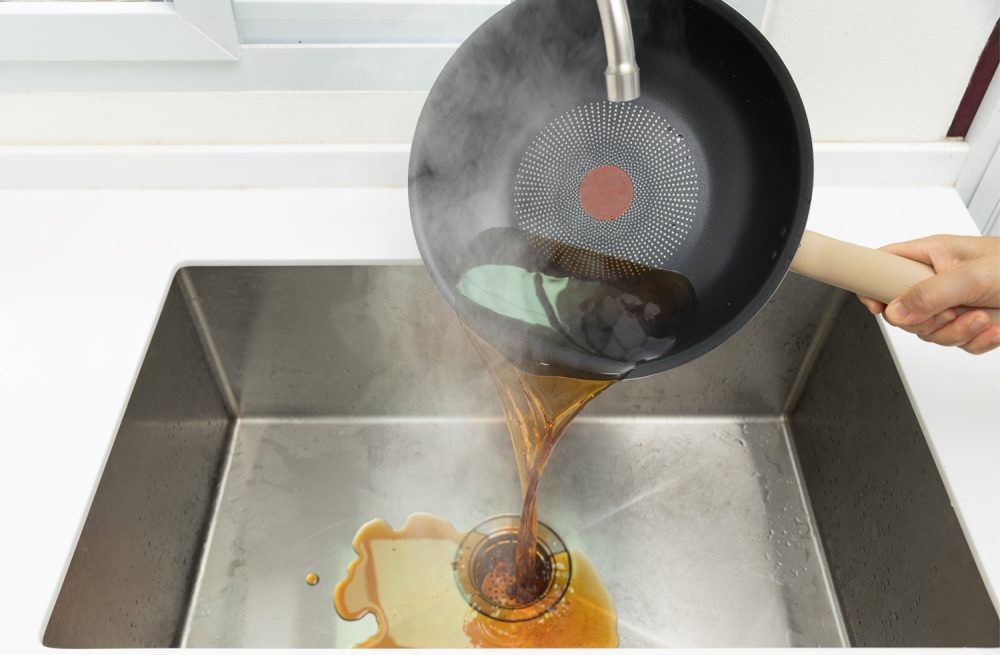
After cooking a meal, it may seem harmless to rinse leftover oil, fats or grease down the drain of your kitchen sink. While the grease may appear liquid when it’s hot, it can quickly become a major problem for your plumbing and the wastewater system serving your community.
What Happens After You Put Grease Down the Drain?
When hot grease enters your plumbing system, it cools as it travels through pipes. As it cools, the grease solidifies and sticks to pipe walls.
Over time, layers of grease build up and reduce the flow of wastewater. This buildup can eventually create a complete blockage, leading to:
- Slow-draining sinks
- Sewer backups
- Unpleasant odors
- Costly plumbing repairs
- Damage to pumps and wastewater equipment
Even small amounts of grease poured down the drain regularly can create significant problems over time.
The Growing Problem of “Fatbergs” Developing From Putting Grease Down The Drain
Wastewater professionals frequently encounter large masses of grease, wipes, and debris known as fatbergs. These blockages can grow to enormous sizes within sewer systems and require extensive labor and equipment to remove.
Fatbergs not only increase maintenance costs but can also contribute to sewer overflows that impact the environment and public health.
Common Items That Should Never Go Down the Drain
Many people know not to pour bacon grease into the sink, but several other items can cause similar issues:
- Cooking oils
- Butter and margarine
- Meat drippings
- Gravy
- Salad dressings
- Shortening and lard
- Dairy products in large quantities
- Sauces with high oil content
Remember: If it can harden, separate, or stick to a surface, it likely doesn’t belong in your drain.
The Right Way to Dispose of Grease
Instead of pouring grease down the sink:
- Allow grease to cool.
- Pour it into a disposable container, can, or jar.
- Seal the container.
- Place it in the trash once it has solidified.
For small amounts of grease, wiping pans with a paper towel before washing can also help prevent buildup.
Why It Matters
Grease blockages don’t just affect individual homes and businesses. They place additional strain on municipal sewer systems, increase maintenance costs, and can lead to environmental incidents if sewer overflows occur.
A few simple disposal habits can help protect:
- Your plumbing
- Public sewer infrastructure
- Wastewater treatment equipment
- Local waterways and the environment
Help Protect Our Water and Wastewater Systems
At Jersey Environmental Solutions, we understand the importance of maintaining reliable water and wastewater infrastructure. Preventive practices like proper grease disposal help keep systems operating efficiently and reduce costly repairs for everyone.
When it comes to grease, the rule is simple:
“Cool it. Collect it. Trash it.”
Your pipes and your community will thank you.
Reach out to our team at JES today if you are in need of assistance with your water or waste water system. Follow us on Instagram to keep up with all our latest happenings & specials.


